Labor Day 2026 Heat Wave: The Records It Broke, City by City
A heat dome parked over the Plains held 21 cities in the upper 90s and low 100s through the holiday. We stacked the observed highs against 56 years of NOAA records: 11 cities broke or tied a daily record, Fort Smith hit 105.9°F, and Joplin tied its hottest Labor Day ever.
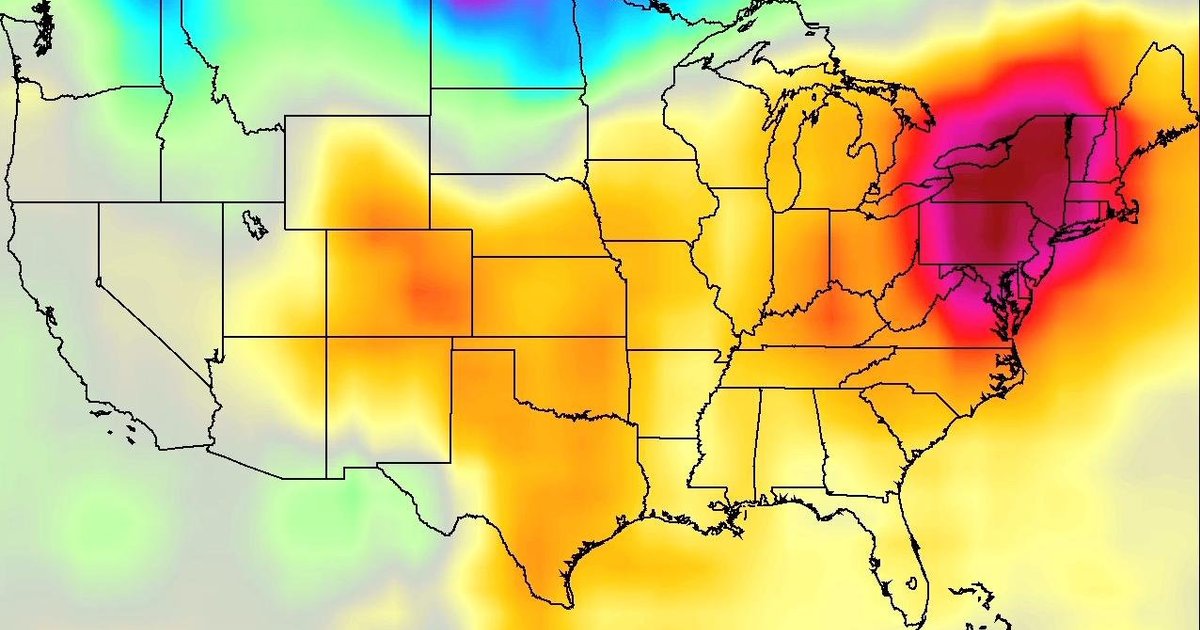
The Labor Day 2026 heat dome delivered. Over the Saturday–Monday holiday weekend, 11 of the 21 Plains, Midwest and Mid-South cities we track broke or tied a daily heat record — 12 outright records and 6 ties — and NOAA stations logged 1,331 daily record highs nationwide from August 28 through Labor Day, including 488 over the holiday weekend alone. It didn't match the all-time benchmark — nothing this weekend touched the 111°F Dallas–Fort Worth hit on Labor Day 2000 — but the record book is written city by city and date by date, and on that scoreboard this weekend scored.
Fort Smith, AR was the hottest, hitting 105.9°F on Saturday (a September 5 record) and 105°F on Labor Day itself. Joplin, MO reached 104°F Sunday — a record — then 100.9°F on Labor Day, tying its hottest Labor Day since 1970 (also 100.9°F, in 1998). Springfield, MO posted back-to-back 100.9°F readings Saturday and Sunday, its first 100s of the stretch and both date records. Memphis, Topeka, Nashville, Columbia and Lincoln broke records too; Tulsa tied its Sunday mark at 105°F. Two forecast headliners cooled off: Little Rock peaked at 100.9°F rather than the forecast 103°F, and the northern front held Minneapolis and Chicago in the 80s exactly as expected.
We measured it the way we measure every heat event: by pulling each city's observed daily high from its primary long-record airport station in our NOAA records database, finding the actual first Monday of September for every year since 1970, and stacking the 2026 readings against every prior reading on the same calendar date. The full tables are below; a city-by-city look at typical Labor Day weather is on our holiday page.
The heat dome broke records for eleven straight days
This was a long event, not a one-day spike. The ridge responsible sat on the southern Plains from the last days of August through Labor Day, and our daily records tracker logged the damage the whole way: 1,331 daily record highs at US stations from August 28 through September 7, of which 488 fell over the holiday weekend (September 5–7). The pre-holiday run was fierce — 278 record highs on Friday September 4 alone — and the numbers only tapered as the ridge finally eased, to 75 records on Labor Day and 52 the day after.
The pattern was a textbook heat dome: a strong upper-level ridge centered over Oklahoma and Kansas, sinking air that warms as it compresses, clear skies, and soil baked for weeks. The northern edge of the ridge was where the weekend's only real relief lived — a front dropped Minneapolis from 87°F Saturday to the low 80s by Labor Day, and held Chicago in the upper 70s and low 80s all weekend. Everyone south of Interstate 80 stayed under the dome through Monday.
The Hottest Labor Day on Record, City by City (1970–2025)
Highest daily high recorded on Labor Day itself (the first Monday of September) and across the full Saturday–Monday holiday weekend, at each city's primary NOAA station. “Normal” is the 1991–2020 average Labor Day high. Sorted by the hottest Labor Day.
| City | Normal | Hottest Labor Day | Year | Hottest LD Weekend | Year | 100°F Labor Days |
|---|---|---|---|---|---|---|
| Dallas–Fort Worth, TX | 92.9° | 111° | 2000 | 111° | 2000 | 7 |
| Shreveport, LA | 92.6° | 107.9° | 2000 | 109° | 2000 | 1 |
| Fort Smith, AR | 92.1° | 105.9° | 2000 | 109° | 2000 | 5 |
| Oklahoma City, OK | 90.5° | 105.9° | 2000 | 107.9° | 2000 | 8 |
| Wichita, KS | 90° | 105.9° | 2012 | 107.9° | 2000 | 4 |
| Tulsa, OK | 91° | 105° | 1978, 1998 | 107° | 2000 | 5 |
| Sioux Falls, SD | 78.7° | 104° | 1976 | 104° | 1976 | 2 |
| Topeka, KS | 86.6° | 102.9° | 1975 | 109° | 2000 | 3 |
| Omaha, NE | 83.2° | 102.9° | 1975 | 102° | 2000 | 1 |
| Little Rock, AR | 90.8° | 102° | 1998, 2000 | 104° | 2000 | 2 |
| Memphis, TN | 90.2° | 102° | 2000 | 102° | 2000 | 2 |
| Lincoln, NE(since 1972) | 83.8° | 100.9° | 1975 | 105.9° | 2000 | 1 |
| Joplin, MO | 89.1° | 100.9° | 1998 | 105° | 2000 | 3 |
| Kansas City, MO(since 1973) | 84.8° | 100° | 2002 | 105.9° | 2000 | 1 |
| Springfield, MO | 87.2° | 98° | 1998 | 102° | 2000 | 0 |
| Minneapolis, MN | 78.6° | 98° | 2023 | 98° | 2023 | 0 |
| St. Louis, MO | 87.1° | 96° | 1970, 1983 | 104° | 1984 | 0 |
| Nashville, TN | 87.9° | 96° | 1980, 1990 | 98.9° | 1998, 1999, 2011 | 0 |
| Columbia, MO | 85.2° | 95° | 2007 | 98.9° | 1984 | 0 |
| Des Moines, IA | 82.4° | 95° | 2023 | 98° | 1984, 2000 | 0 |
| Chicago, IL | 80.1° | 95° | 1983 | 96° | 1984 | 0 |
Source: NOAA NCEI GHCN-Daily via our records database. Kansas City (KCI) and Lincoln records begin in 1973 and 1972; all others in 1970. 45 Labor Day readings of 100°F or higher across the 21 cities since 1970.
Labor Day 2000: the weekend 2026 couldn't beat
Look down the “Hottest LD Weekend” column and one year keeps repeating. The Labor Day weekend of September 2–4, 2000 is the reigning champion in 14 of our 21 cities. Saturday, September 2, 2000 was the day for most of them: Topeka and Fort Smith 109°F, Wichita and Oklahoma City 107.9°F, Tulsa 107°F, Kansas City and Lincoln 105.9°F, Joplin 105°F, Omaha 102°F. Sunday brought 109°F to Shreveport and 104°F to Little Rock. Then the holiday itself, Monday the 4th, delivered the single hottest Labor Day reading in the dataset: 111°F at Dallas–Fort Worth, with Shreveport at 107.9°F and eight cities at or above 100°F. Labor Day 2026's hottest reading — Fort Smith's 105°F — sat six degrees below that peak.
Three other holidays fill in the rest of the table:
- Labor Day 2023 (September 4) — the hottest on average. A 96.9°F mean high across all 21 cities, with 17 of them at 95°F or hotter. It was the northern tier's holiday: Minneapolis 98°F and Des Moines 95°F set their all-time Labor Day marks, Sioux Falls and Topeka hit 100°F, and Little Rock's 102°F two days later is the September 6 record 2026 fell just short of.
- Labor Day 2012 (September 3) — seven cities at 100°F. Wichita's 105.9°F is still its hottest Labor Day; Fort Smith 105°F, Tulsa and Oklahoma City 104°F, Dallas–Fort Worth 100.9°F, Joplin and Topeka 100°F.
- Labor Day 1998 (September 7) — the Ozarks' hottest. Tulsa 105°F (tying 1978), Little Rock and Fort Smith 102°F, Joplin 100.9°F and Springfield 98°F — the Joplin mark 2026 tied on the very same calendar day, Labor Day September 7.
For contrast: last Labor Day, September 1, 2025, Kansas City and Topeka topped out at 71°F, Omaha at 66.9°F and Springfield at 77°F. Twelve months later the same cities ran 20 to 30 degrees warmer.
What Actually Happened: Observed Highs vs. the Daily Record, Sept 5–7
The observed daily high beside the station's 1970–2025 record high for that calendar date. R = the reading broke the record, T = it tied. Sorted by the Labor Day (Sept 7) observed high.
| City | Sat Sept 5 | Sun Sept 6 | Labor Day, Sept 7 |
|---|---|---|---|
| Fort Smith, AR | 105.9°Rrec 104° (1998) | 105°Trec 105° (2012) | 105°Rrec 104° (2012) |
| Tulsa, OK | 102.9°rec 105° (1998) | 105°Rrec 102.9° (1990) | 102.9°rec 105° (1998) |
| Oklahoma City, OK | 100°rec 105.9° (1998) | 102°rec 104° (1998) | 102°rec 105° (2012) |
| Dallas–Fort Worth, TX | 100°rec 104° (2023) | 100°rec 105° (2023) | 102°rec 107° (2023) |
| Joplin, MO | 102.9°Trec 102.9° (1998) | 104°Rrec 100° (1990) | 100.9°Trec 100.9° (1998) |
| Shreveport, LA | 98°rec 102° (1990, 2023) | 96.9°rec 102.9° (2012, 2023) | 100°rec 107.9° (2023) |
| Topeka, KS | 100.9°Rrec 96.9° (1990, 2002, 2023) | 98.9°rec 100° (1998) | 98.9°rec 100° (2013) |
| Memphis, TN | 102°Rrec 100° (1980, 1990) | 102.9°Rrec 100.9° (1990) | 96.9°rec 100° (1980) |
| Springfield, MO | 100.9°Rrec 98.9° (1990, 1998) | 100.9°Rrec 98.9° (1990) | 96.9°rec 98° (1990, 1998) |
| Little Rock, AR | 98.9°rec 100.9° (1998) | 100.9°rec 102° (2023) | 96.9°rec 102° (1998) |
| Lincoln, NE | 98°Trec 98° (1990) | 91.9°rec 100° (1984) | 96.9°Rrec 96° (1985) |
| Nashville, TN | 100.9°Rrec 98.9° (1999) | 98°rec 100.9° (1990) | 91°rec 102° (1990) |
| Kansas City, MO | 98°rec 98.9° (1990) | 96.9°rec 100.9° (1990) | 91°rec 96.9° (1978, 2013) |
| Omaha, NE | 93.9°rec 96.9° (1990) | 93.9°rec 98° (1990, 2015) | 91°rec 100° (1971) |
| Columbia, MO | 100°Rrec 98° (1990) | 93.9°rec 98° (1990) | 89.9°rec 96.9° (1971) |
| St. Louis, MO | 100.9°Trec 100.9° (1990) | 89.9°rec 100.9° (1990) | 87°rec 96° (1970, 2016) |
| Sioux Falls, SD | 91.9°rec 98° (1990) | 82.9°rec 104° (1976) | 86°rec 100° (1971) |
| Minneapolis, MN | 87°rec 91.9° (2023) | 80.9°rec 93° (1978, 1985) | 84.9°rec 98° (1976) |
| Chicago, IL | 80.9°rec 95° (1983) | 78.9°rec 96° (1990) | 80.9°rec 98.9° (1985) |
| Des Moines, IA | 91.9°rec 96° (1990) | 86°rec 96.9° (1990) | 78.9°rec 96.9° (1978) |
| Wichita, KS | 102°Trec 102° (1985) | 102°rec 102.9° (1998) | n/arec 102° (1998, 2015) |
Observed highs: NOAA GHCN-Daily for each airport, September 5–7, 2026 (queried September 11, 2026). Records: NOAA GHCN-Daily, 1970–2025. Wichita's September 7 reading was not yet in the archive at query time (n/a). Records shown are against our 1970-onward archive; NWS keeps longer books for most of these cities.
Where the record books actually fell
The cities that set records were not the hottest ones — they were the ones whose record books had room. The deep-summer heat capitals (Dallas, Shreveport, Oklahoma City) ran hot but stayed well under date marks set in far worse years. The records fell in the Ozarks and eastern Plains:
- Fort Smith, AR — the hottest, and two records. 105.9°F Saturday broke the September 5 date record (104°F, 1998), 105°F Sunday tied the 2012 mark, and 105°F on Labor Day broke the September 7 record (104°F, 2012). It was the hottest reading anywhere in the group all weekend.
- Joplin, MO — tied its hottest Labor Day ever. 104°F Sunday smashed the September 6 record (100°F, 1990), and 100.9°F on Labor Day matched the 100.9°F of Labor Day 1998 — a tie of the hottest Labor Day in Joplin's 56-year record, and only the fourth 100°F Labor Day it has ever had.
- Springfield, MO — back-to-back 100.9°F. Both Saturday and Sunday broke their date records (98.9°F), and they were Springfield's first 100°F readings of the entire stretch. It cooled to 96.9°F on Labor Day itself, just short of its 98°F holiday record.
- Memphis, TN — Saturday and Sunday records. 102°F Saturday beat the shared 100°F date record, and 102.9°F Sunday broke the 100.9°F September 6 record from 1990.
- Saturday specials. Topeka's 100.9°F cleared a September 5 record of 96.9°F by four degrees; Nashville's 100.9°F broke 98.9°F from 1999; Columbia's 100°F beat 98°F; and St. Louis tied its 100.9°F date record (1990). Tulsa broke through Sunday with 105°F (past 102.9°F, 1990), Wichita tied its 102°F Saturday record, and Lincoln edged its Labor Day record with 96.9°F.
- The forecast busts. Little Rock was billed for 103°F Sunday and reached 100.9°F — hot, but under the 102°F date record. And as the models promised, the northern front kept Minneapolis (87° → 81° → 85°) and Chicago (81° → 79° → 81°) out of it entirely.
A note on “records”
Every number here is the official daily high from that station, pulled from NOAA's GHCN-Daily archive — the 2026 figures are observed highs, not forecasts. Our continuous, gap-free daily record begins in 1970, so when we say “record” we mean since 1970 (since 1973 for Kansas City's KCI station and 1972 for Lincoln). The National Weather Service keeps longer books for most of these cities, back to the 1870s in some cases, so a reading that broke our 1970-onward record may still sit under an older NWS mark; we flag the difference so the claims stay honest. Wichita's September 7 reading had not posted to the archive when we queried it on September 11 and is shown as n/a.
Labor Day is 2.5 degrees hotter than it was
Across the same 21 cities, the average Labor Day high was 84.6°F in 1970–1989 and 87.1°F in 2006–2025 — a 2.5°F rise, with 20 of the 21 cities warmer in the recent period (Omaha is the lone exception, essentially flat). The biggest gains are in the Ozarks and the eastern Plains: St. Louis is up 5.1°F on the holiday, Joplin 5.0°F, Wichita 4.1°F, Tulsa 3.9°F and Springfield 3.6°F. The Gulf-side cities that were already hot, Dallas and Shreveport, moved less than a degree and a half.
Extremes cluster rather than trend: the 45 Labor Day readings of 100°F or more since 1970 came 11 in the 1970s, 2 in the 1980s, 10 in the 1990s, 9 in the 2000s, 9 in the 2010s and 4 so far this decade. What has changed is the floor. A ridge that would have produced a 92°F holiday in 1985 now produces 97°F — which is exactly what this weekend looked like across Kansas and Missouri: not a freak reading, just a normal heat dome starting from a warmer baseline. Our city-by-city summer warming analysis and the running tally of a record-warm 2026 show the same shape.
Curious what your own town did on any Labor Day? Our historical weather lookup returns the daily high and low for any US ZIP code back to 1970 — enter September 7 and see how 2026 stacks up where you live.
Frequently Asked Questions
What is the hottest Labor Day on record?▾
In our 56 years of NOAA daily records (1970–2025) for 21 Plains and Mid-South cities, the hottest Labor Day was September 4, 2000: Dallas–Fort Worth hit 111°F, Shreveport 107.9°F, Fort Smith and Oklahoma City 105.9°F, and eight of the 21 cities reached 100°F. Labor Day 2023 was the hottest on average, with a 96.9°F mean high across all 21 cities. Labor Day 2026 (September 7) topped out at 105°F in Fort Smith — hot, but short of 2000.
How hot was Labor Day 2026?▾
A heat dome pushed most of the Plains and Mid-South into the upper 90s and low 100s. On Labor Day itself (September 7), Fort Smith reached 105°F, Tulsa 102.9°F, and Dallas–Fort Worth and Oklahoma City 102°F. Over the holiday weekend, 11 of the 21 cities we track broke or tied a daily record: 12 record breaks and 6 ties. Nationally, NOAA stations logged 1,331 daily record highs from August 28 through September 7, including 488 over the Saturday–Monday holiday weekend alone.
Did any city break a heat record on Labor Day weekend 2026?▾
Yes — 11 of the 21 cities broke or tied a daily record between September 5 and 7. Fort Smith hit 105.9°F on Saturday (a September 5 record) and 105°F on Labor Day. Joplin reached 104°F on Sunday (a record) and 100.9°F on Labor Day, tying its hottest Labor Day ever. Springfield hit 100.9°F on both Saturday and Sunday, its first 100°F readings of the stretch; Memphis, Topeka, Nashville and Columbia also set records, and Tulsa tied its Sunday mark with 105°F.
How hot was it in Kansas City on Labor Day 2026?▾
Kansas City reached 98°F on Saturday, 96.9°F on Sunday and 91°F on Labor Day (September 7), roughly 6 to 13°F above the 1991–2020 average Labor Day high of 84.8°F. That fell short of its September date records and of its hottest Labor Day since 1973 (100°F in 2002). A year earlier, Labor Day 2025, it had reached only 71°F.
Is Labor Day getting hotter?▾
Yes. Across the same 21 cities, the average Labor Day high rose from 84.6°F in 1970–1989 to 87.1°F in 2006–2025, a gain of 2.5°F, and 20 of the 21 cities are warmer in the recent period. There have been 45 readings of 100°F or higher on Labor Day since 1970, including 8 cities on a single holiday in 2000 and 7 in 2012.
Related Analysis
- Labor Day Weather History: Typical Conditions by City
- Daily Weather Records Broken Today, Mapped
- July 2026 East Coast Heat Wave: Every Record It Broke
- July 2026 Heat Recap: 1,500+ Daily Records
- The Worst Heat Waves in US History
- When Is the Hottest Day of the Year in Your City?
- The First Fall Frost Is Arriving Later Everywhere
- Kansas City Weather History & Records