The Strongest Hurricanes Ever Recorded
The “strongest hurricane ever” is a trick question — it has two answers. One storm holds the wind record; a completely different one holds the pressure record. Here is the full ranking both ways, and the measurement quirk that makes the lists disagree.
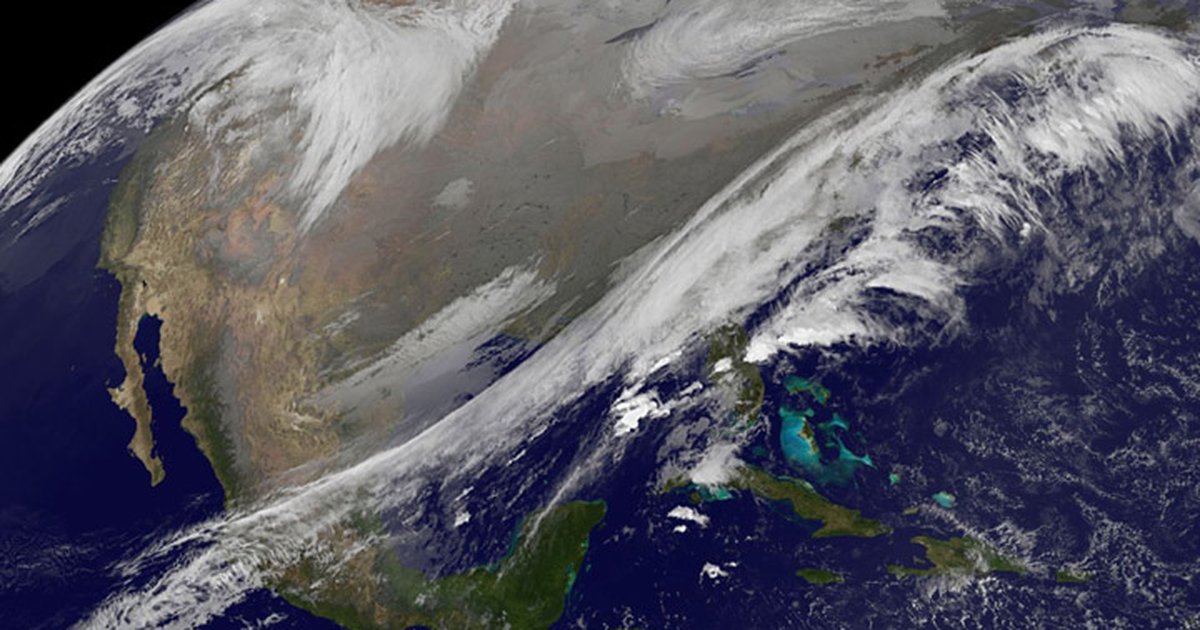
By wind, the strongest hurricane ever recorded is Hurricane Patricia, which reached 215 mph sustained winds off Mexico’s Pacific coast in October 2015 — the highest reliably measured in any tropical cyclone on Earth. By pressure, the record belongs to Typhoon Tip: 870 millibars over the western Pacific in October 1979. Two different storms, two different records, and that is the whole knot people trip over. Meteorologists rate a hurricane’s raw strength two ways — peak sustained wind and minimum central pressure — and the storm that tops one list almost never tops the other.
Below are both rankings, worldwide, followed by the Atlantic’s own record-holders — the list most U.S. readers actually have in mind — and a short explainer on why the numbers you see quoted elsewhere so often disagree. There is no hurricane database behind this page the way there is for our temperature and tornado work; every figure here is sourced to the national warning centers and the WMO.
The strongest by wind
Peak 1-minute sustained winds, the standard U.S. and JTWC metric. Patricia stands alone at the top; below it, a cluster of Atlantic and Pacific monsters sits at 185–195 mph. The 2025 entry is new: the National Hurricane Center’s post-storm analysis of Melissa raised its peak to 190 mph, tying Hurricane Allen (1980) for the strongest Atlantic hurricane ever measured by wind.
| # | Storm | Year | Basin | Peak wind |
|---|---|---|---|---|
| 1 | PatriciaHighest reliably measured on Earth | 2015 | E. Pacific | 215 mph |
| 2 | HaiyanJTWC estimate; devastated the Philippines | 2013 | W. Pacific | 195 mph |
| 3 (tie) | Allen | 1980 | Atlantic | 190 mph |
| 3 (tie) | MelissaNHC post-analysis — ties Allen for the Atlantic record | 2025 | Atlantic | 190 mph |
| 5 (tie) | Wilma | 2005 | Atlantic | 185 mph |
| 5 (tie) | Gilbert | 1988 | Atlantic | 185 mph |
| 5 (tie) | Labor Day HurricaneStrongest U.S. landfall on record | 1935 | Atlantic | 185 mph |
| 5 (tie) | DorianStalled over the Bahamas at peak | 2019 | Atlantic | 185 mph |
1-minute sustained winds. Several other western Pacific super typhoons have also been estimated near 195 mph by the JTWC; the table lists the best-documented cases. Pre-satellite estimates such as Typhoon Nancy’s reputed 215 mph (1961) are excluded as unreliable.
The strongest by pressure
Minimum central pressure is the cleaner global comparison — it is measured the same way everywhere and doesn’t depend on wind-averaging conventions. By this metric the order flips: Typhoon Tip, not Patricia, is No. 1, and Patricia slips to second by two millibars. The lower the number, the deeper and more intense the storm.
| # | Storm | Year | Basin | Min pressure |
|---|---|---|---|---|
| 1 | TipLowest pressure ever recorded in a tropical cyclone | 1979 | W. Pacific | 870 mb |
| 2 | Patricia | 2015 | E. Pacific | 872 mb |
| 3 (tie) | Nora / June | 1973 / 1975 | W. Pacific | 875 mb |
| 5 | WilmaAtlantic basin record | 2005 | Atlantic | 882 mb |
| 6 | Gilbert | 1988 | Atlantic | 888 mb |
| 7 (tie) | Labor Day Hurricane | 1935 | Atlantic | 892 mb |
| 7 (tie) | Melissa | 2025 | Atlantic | 892 mb |
| 9 | Haiyan | 2013 | W. Pacific | 895 mb |
| 10 | Allen | 1980 | Atlantic | 899 mb |
The Atlantic’s own record-holders
When Americans say “strongest hurricane,” they usually mean the Atlantic. Wilma’s 882 millibars in October 2005 is the deepest the basin has ever produced, set during the same frantic season as Katrina and Rita. Note how recent the top of this list runs — five of the ten lowest Atlantic pressures were set this century, and Melissa (2025) and Milton (2024) added two of them in consecutive years.
| # | Storm | Year | Min pressure |
|---|---|---|---|
| 1 | Wilma | 2005 | 882 mb |
| 2 | Gilbert | 1988 | 888 mb |
| 3 (tie) | Labor Day Hurricane | 1935 | 892 mb |
| 3 (tie) | Melissa | 2025 | 892 mb |
| 5 | Rita | 2005 | 895 mb |
| 6 | Milton | 2024 | 897 mb |
| 7 | Allen | 1980 | 899 mb |
| 8 | Camille | 1969 | 900 mb |
| 9 | Katrina | 2005 | 902 mb |
| 10 | Mitch | 1998 | 905 mb |
The single most important Atlantic entry for U.S. readers isn’t on top of the pressure list by much, but it is the benchmark for landfall: the 1935 Labor Day hurricane came ashore in the Florida Keys at 892 millibars, still the lowest pressure of any U.S. landfall on record. For how these storms rank by the toll they took rather than their raw strength, see our deadliest hurricanes in U.S. history ranking and the four Category 5 hurricanes to make U.S. landfall.
Why the two lists don’t agree
If you have ever seen the same storm quoted at two different wind speeds, this is why. There are three moving parts. The first is simply that wind and pressure measure different aspects of a storm, and the fastest-winded hurricane is rarely the lowest-pressure one — Patricia wins the wind list, Tip the pressure list, and neither appears at the top of the other.
The second is the averaging convention. The U.S. National Hurricane Center and the Joint Typhoon Warning Center report 1-minute sustained winds; Japan’s JMA and most other agencies use a 10-minute average, which comes out roughly 12% lower. So a western Pacific typhoon can appear at 195 mph on a U.S.-style list and around 160 mph on an international one — same storm, different stopwatch. The rankings on this page use 1-minute winds throughout for consistency.
The third is measurement era. Hurricane-hunter aircraft, dropsondes and satellites have only made intensity estimates precise in recent decades; older or remote storms were pegged by cruder means. That is why figures like Typhoon Nancy’s reputed 215 mph in 1961 are no longer trusted, and why the lowest, best-sampled pressures keep turning up in the satellite era. The newest reminder: a dropsonde flown into Hurricane Melissa in 2025 clocked a 252 mph gust — the strongest ever recorded in a tropical cyclone by that method. Hurricane season dates and the climatological peak are covered in our peak hurricane season guide, and the current year’s storms on the 2026 hurricane season page.
Frequently Asked Questions
What is the strongest hurricane ever recorded?
It depends which yardstick you use. By peak wind, Hurricane Patricia holds the record: 215 mph sustained winds off the Pacific coast of Mexico in October 2015 — the highest reliably measured in any tropical cyclone on Earth. By minimum central pressure, the more apples-to-apples global metric, it is Typhoon Tip, which bottomed out at 870 millibars over the western Pacific in October 1979. Both records still stand.
Is Hurricane Patricia or Typhoon Tip stronger?
Each wins a different category. Patricia (2015) had the stronger winds — 215 mph versus roughly 190 mph for Tip. Tip (1979) had the lower pressure — 870 mb versus Patricia’s 872 mb — and was also a far larger storm overall; it is widely cited as the largest tropical cyclone on record. Patricia is the windiest; Tip is the deepest and widest.
What is the strongest Atlantic hurricane ever recorded?
By pressure, Hurricane Wilma (2005) holds the Atlantic record at 882 millibars, ahead of Gilbert (1988, 888 mb) and the 1935 Labor Day hurricane and Melissa (2025), both at 892 mb. By wind, Allen (1980) and Melissa (2025) share the top spot at 190 mph. Wilma is the Atlantic’s deepest; Allen and Melissa are its windiest.
Why do different lists give different “strongest” hurricanes?
Three reasons. First, wind versus pressure measure different things, and the strongest by one is rarely the strongest by the other. Second, wind-averaging conventions differ: U.S. agencies (NHC, JTWC) report 1-minute sustained winds, while Japan’s JMA and most of the world use 10-minute averages, which run roughly 12% lower — so the same storm can be listed at very different wind speeds. Third, older and remote storms were measured less precisely; pre-satellite wind estimates like Typhoon Nancy’s reputed 215 mph in 1961 are now considered unreliable and are excluded from modern rankings.
What was the strongest hurricane to hit the United States?
The 1935 Labor Day hurricane, which struck the Florida Keys with a central pressure of 892 millibars and roughly 185 mph winds — the lowest pressure of any U.S. landfall on record. It remains the benchmark, more than nine decades later. Among recent storms, Dorian (2019) and Melissa (2025) also reached 185–190 mph at their peaks, though Dorian weakened before brushing the U.S. coast.
Sources & Method
Intensity figures are from the national warning centers and the World Meteorological Organization: the NOAA National Hurricane Center and its HURDAT2 best-track database for the Atlantic and eastern Pacific, the Joint Typhoon Warning Center and Japan Meteorological Agency for the western Pacific, cross-checked against the WMO’s global weather-and-climate extremes archive and Wikipedia’s continuously-sourced list of the most intense tropical cyclones (reviewed October 29, 2026). Hurricane Melissa’s 190 mph / 892 mb peak reflects the NHC’s post-storm Tropical Cyclone Report following its October 28, 2025 landfall in Jamaica. Winds are 1-minute sustained unless noted; pressures are in millibars. This page carries no first-party database analysis — unlike our temperature and tornado work, there is no hurricane best-track table in our records, so every number is externally cited.